Planning a trip to Gangtok is exciting, but packing for Sikkim’s mountain capital requires a little more thought than packing for a typical city break. Changing temperatures, cool evenings, occasional rain, winding roads and high-altitude excursions mean the right combination of clothing and travel essentials can make your journey much more comfortable. A practical Gangtok packing list should therefore balance warmth, rain protection, comfortable walking gear and everyday necessities without leaving you carrying an unnecessarily heavy bag.
Whether you are visiting Gangtok for a relaxed holiday, exploring monasteries and viewpoints, or using the city as a base for destinations such as Tsomgo Lake and Nathula Pass, your requirements will vary depending on the season and itinerary. This guide explains what to pack for Gangtok trip planning, including clothing, footwear, medicines, electronics and useful mountain-travel accessories. It also covers seasonal considerations and practical preparation tips so you can arrive ready for Gangtok’s distinctive Himalayan conditions.
Gangtok Packing List: The Essentials to Carry
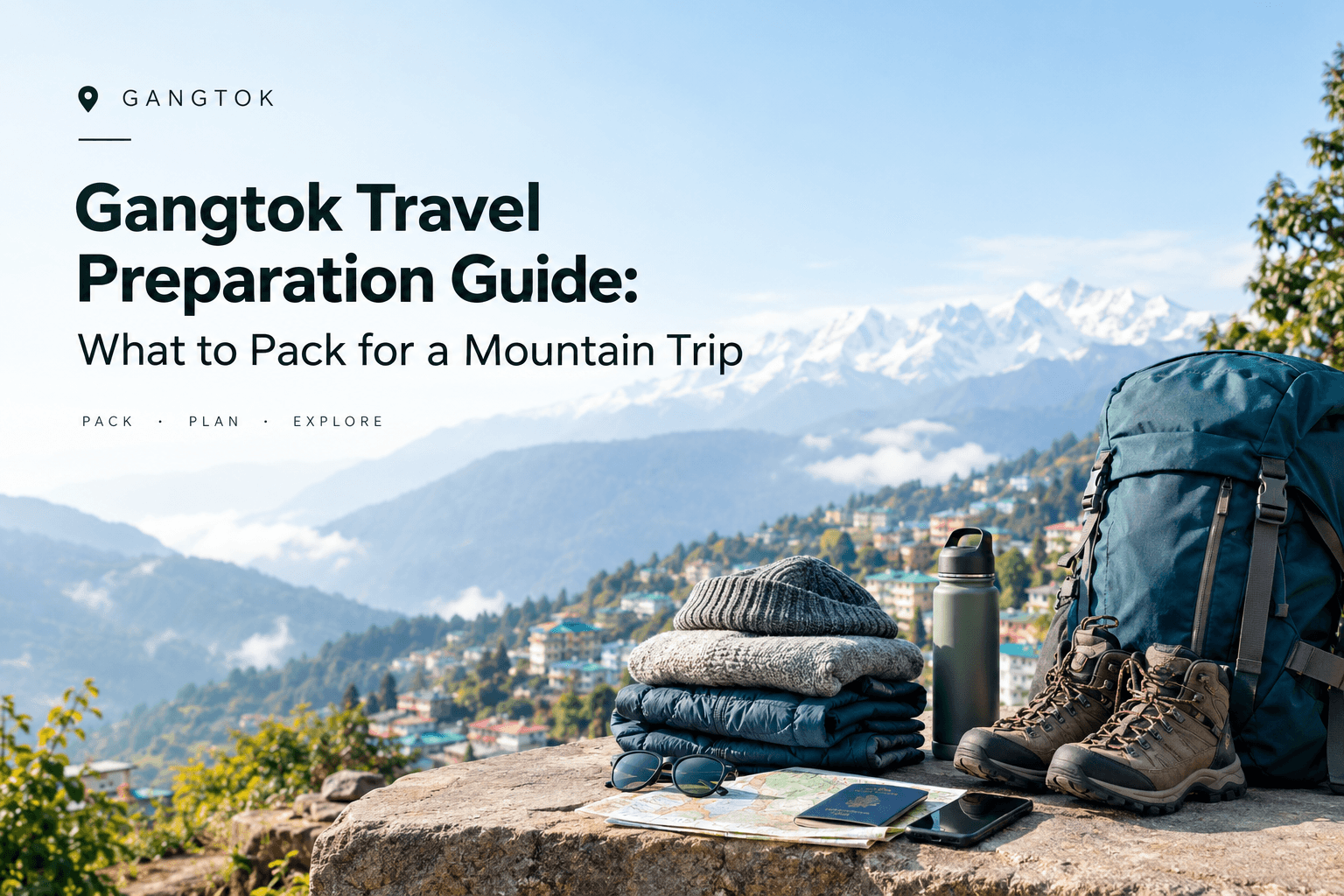
The most useful approach is to pack in layers rather than relying on one extremely heavy jacket. Mountain weather can change during the day, while indoor spaces and vehicles may feel considerably different from exposed viewpoints.
Clothing: Think in Layers
A lightweight base layer, a warm mid-layer and an outer jacket provide more flexibility than several bulky sweaters.
For most travellers, the basic clothing selection should include:
- T-shirts or moisture-friendly inner layers
- Full-sleeve shirts or thermal layers
- A fleece, sweatshirt or light woollen layer
- A warm jacket or insulated outer layer
- Comfortable trousers or trekking pants
- Socks, preferably with a few warm pairs
- Sleepwear suitable for cool nights
- A compact rain jacket or poncho
If you are travelling during winter, increase the number of warm layers. A thermal inner layer, insulated jacket, woollen socks, gloves and a warm cap can become particularly useful when travelling beyond Gangtok.
The key is versatility. You may start the morning in comfortable sunshine, encounter colder conditions at a higher viewpoint and return to town when temperatures have risen again.
Footwear Matters More Than You Think
Comfortable footwear should be one of the priorities in your Gangtok trip checklist. Gangtok has steep roads, stairs, uneven surfaces and walking routes around monasteries and viewpoints.
Carry one pair of comfortable walking shoes with good grip. If your itinerary includes short hikes or higher-altitude excursions, trekking shoes with a reliable sole are preferable.
Avoid carrying multiple fashion-oriented shoes unless your trip specifically requires them. A good walking pair and lightweight sandals or casual footwear are generally enough for most itineraries.
What to Pack for Gangtok Trip by Season
Gangtok experiences distinct seasonal conditions, so your luggage should reflect the month of travel. Instead of following a single fixed list throughout the year, adjust your essentials according to temperature, rainfall and your planned excursions.
Spring: March to May
Spring is a pleasant period for sightseeing, with relatively comfortable daytime conditions and cooler mornings and evenings. Rhododendrons and other Himalayan flora can also add colour to the landscape.
Your spring Gangtok travel essentials should include light clothing, one warm layer, a jacket and comfortable walking shoes. A compact umbrella or rain jacket is worthwhile because mountain weather can be unpredictable.
Sunglasses and sunscreen are also useful when spending time outdoors, particularly at elevated viewpoints.
Monsoon: June to September
The monsoon requires more preparation. Rain can affect road journeys, walking conditions and outdoor sightseeing across Sikkim.
A waterproof outer layer is more useful than a simple umbrella when travelling between destinations. Pack quick-drying clothes, waterproof footwear or shoe protection and extra socks.
Protect electronics and important documents with waterproof pouches or sealed bags. A small backpack with a rain cover is particularly practical for day excursions.
During this season, keep your itinerary flexible. Road conditions can influence journeys to destinations outside Gangtok, so avoid planning every day around a tightly timed outdoor activity.
Autumn: October to November
Autumn is often associated with clearer mountain views and comfortable sightseeing conditions. However, mornings and evenings can become noticeably colder.
Your clothing should focus on layering: comfortable daytime clothes, a fleece or sweater and a warm jacket for early mornings and evenings. If you plan to visit higher-altitude areas, add gloves and a warm cap to your Gangtok packing list.
This is also a good time to carry a reusable water bottle and sun protection because you may spend extended periods outdoors.
Winter: December to February
Winter requires the warmest version of your packing strategy. Gangtok itself may not require extreme expedition-level equipment, but temperatures can fall considerably, particularly after sunset and during early-morning travel.
A practical Gangtok winter packing list includes thermal innerwear, a warm insulated jacket, sweaters or fleece layers, woollen socks, gloves, a beanie or warm cap and comfortable closed shoes.
If your itinerary includes Tsomgo Lake or Nathula Pass, prepare for substantially colder conditions than you may experience in central Gangtok. Carry additional warm layers rather than assuming the weather will be similar throughout your trip.
Gangtok Travel Essentials for Day Trips and Sightseeing
A large suitcase is not especially useful once you start exploring. Keep a smaller daypack ready with items you can access quickly.
Your daypack can contain:
- Water bottle
- Sunglasses
- Sunscreen
- Lip balm and moisturiser
- Compact rain protection
- Basic medicines
- Tissues and hand sanitiser
- Power bank
- Identification and required travel documents
- Small snacks
- A reusable shopping bag
For longer road journeys, snacks and water are particularly useful. Mountain routes can take longer than expected because of road conditions, traffic or weather.
Keep important documents in a waterproof pouch. Depending on your itinerary and current travel requirements, permits or identification may be necessary for restricted areas, so check the latest requirements before leaving for excursions.
Health and Personal-Care Items to Carry
Altitude and mountain travel can feel different from a normal urban holiday. Even travellers who are comfortable with long walks may notice fatigue during excursions to higher elevations.
Carry your regular prescription medicines in their original packaging and keep them accessible rather than placing everything inside checked luggage.
A basic personal-care kit can include:
- Prescription medicines
- Basic pain-relief medication
- Motion-sickness medication if required
- Bandages and blister protection
- Personal hygiene products
- Moisturiser
- Lip balm
- Sunscreen
- Hand sanitiser
Do not start taking altitude-related medication without appropriate medical advice. If you have specific health requirements, discuss your travel plans with a qualified medical professional before visiting higher-altitude destinations.
Electronics, Documents and Money
Your phone will likely serve as your camera, navigation device, communication tool and booking reference, so keeping it charged is important.
Carry a power bank and charging cable in your daypack. A universal or compatible travel adapter can also be useful depending on your devices.
Keep digital and physical copies of important documents such as:
- Government-issued identification
- Hotel booking details
- Travel tickets
- Permit-related documents, where applicable
- Emergency contact information
- Travel insurance details, if purchased
Mobile connectivity can vary as you travel away from Gangtok, particularly in remote mountain areas. Download important maps, booking confirmations and essential information before leaving the city.
Cash is also worth carrying in a reasonable amount for smaller purchases and situations where digital payment options may not work reliably.
Practical Gangtok Trip Checklist Before Leaving
Good preparation goes beyond what goes inside your suitcase. A few checks before departure can prevent unnecessary problems once you reach Sikkim.
First, check the weather forecast for Gangtok and your planned destinations separately. Conditions at a high-altitude excursion can differ significantly from those in the city.
Second, review your hotel booking and cancellation terms. Keeping confirmation details accessible is especially useful if you are arriving late or travelling during a busy season.
Third, check your transportation arrangements. Gangtok is connected by road to major nearby transport points, while Bagdogra Airport and New Jalpaiguri Railway Station are commonly used gateways for travellers arriving from outside the region. Allow sufficient time for the road journey rather than treating the transfer as a short city commute.
Finally, avoid overpacking. Mountain travel often involves moving luggage between hotels, vehicles and rooms, so a lighter, organised bag is much easier to manage.
Where to Stay in Gangtok
Your choice of accommodation area can influence how convenient the rest of your trip feels. Staying around MG Marg puts you close to restaurants, shops and one of Gangtok’s most walkable urban areas. It can be a good option for first-time visitors who want easy access to evening dining and central sightseeing.

Areas around Development Area, Tadong and other parts of Gangtok can offer alternatives depending on your budget, hotel preferences and transportation plans. If you are travelling with family, prioritise convenient road access, comfortable rooms and essential amenities rather than choosing accommodation solely for the lowest rate.
For travellers planning early-morning excursions, a property with straightforward vehicle access can be more practical than a hotel located deep inside a pedestrian-heavy area.
You can explore hotels in Gangtok through Goroomgo to compare available accommodation options based on your travel dates and requirements. Since Goroomgo focuses on helping travellers discover and book accommodations across Indian destinations, it can be useful when arranging the hotel portion of a wider Sikkim itinerary.
Smart Packing Tips for a More Comfortable Mountain Trip
The best packing strategy for Gangtok is not about carrying more—it is about carrying the right things.
Use packing cubes or separate pouches for clothing, medicines, electronics and documents. This makes it easier to find essentials during multi-hotel itineraries.
Keep one warm layer and your rain protection in your daypack even when the morning looks clear. Mountain weather can change quickly, and having to unpack your main luggage during a day trip is inconvenient.
Wear your heaviest jacket and shoes while travelling rather than filling your suitcase with bulky items. Leave some space for local purchases, including handicrafts, tea and souvenirs.
Most importantly, build your luggage around your actual itinerary. A relaxed Gangtok city holiday requires less specialised equipment than a trip combining monasteries, viewpoints, mountain roads and high-altitude excursions.
Conclusion
A well-planned Gangtok packing list should prepare you for changing temperatures, occasional rain, long road journeys and colder conditions outside the city. Layered clothing, comfortable shoes, rain protection, personal medicines, sun protection, a power bank and secure document storage cover most of the practical requirements.
Your final luggage should also reflect the season. Spring and autumn call for flexible layers, monsoon travel benefits from waterproof protection, while a Gangtok winter packing list needs significantly warmer clothing for early mornings and high-altitude excursions.
Once your packing is sorted, organise your transport, sightseeing plans and accommodation before departure. With the right preparation, Gangtok becomes much easier to explore at your own pace—from the atmosphere of MG Marg to monasteries, viewpoints and the dramatic mountain landscapes beyond the city.

Written by Kunal Paul
Travel Expert
Kunal Paul is a Travel Expert who turns journeys into memorable experiences. With a passion for discovering destinations, local culture, hidden gems, and practical travel insights, he helps travelers explore smarter and better.