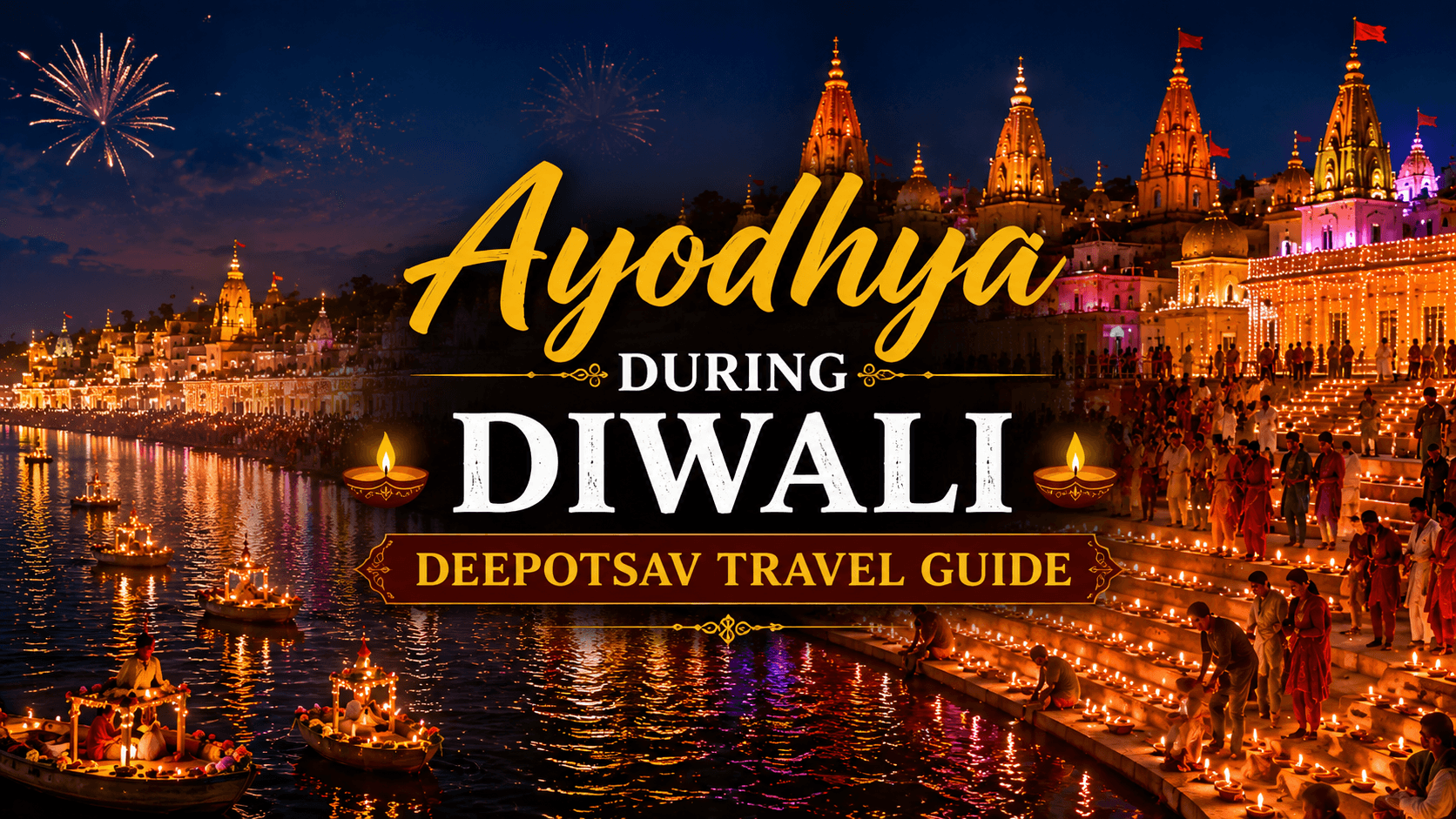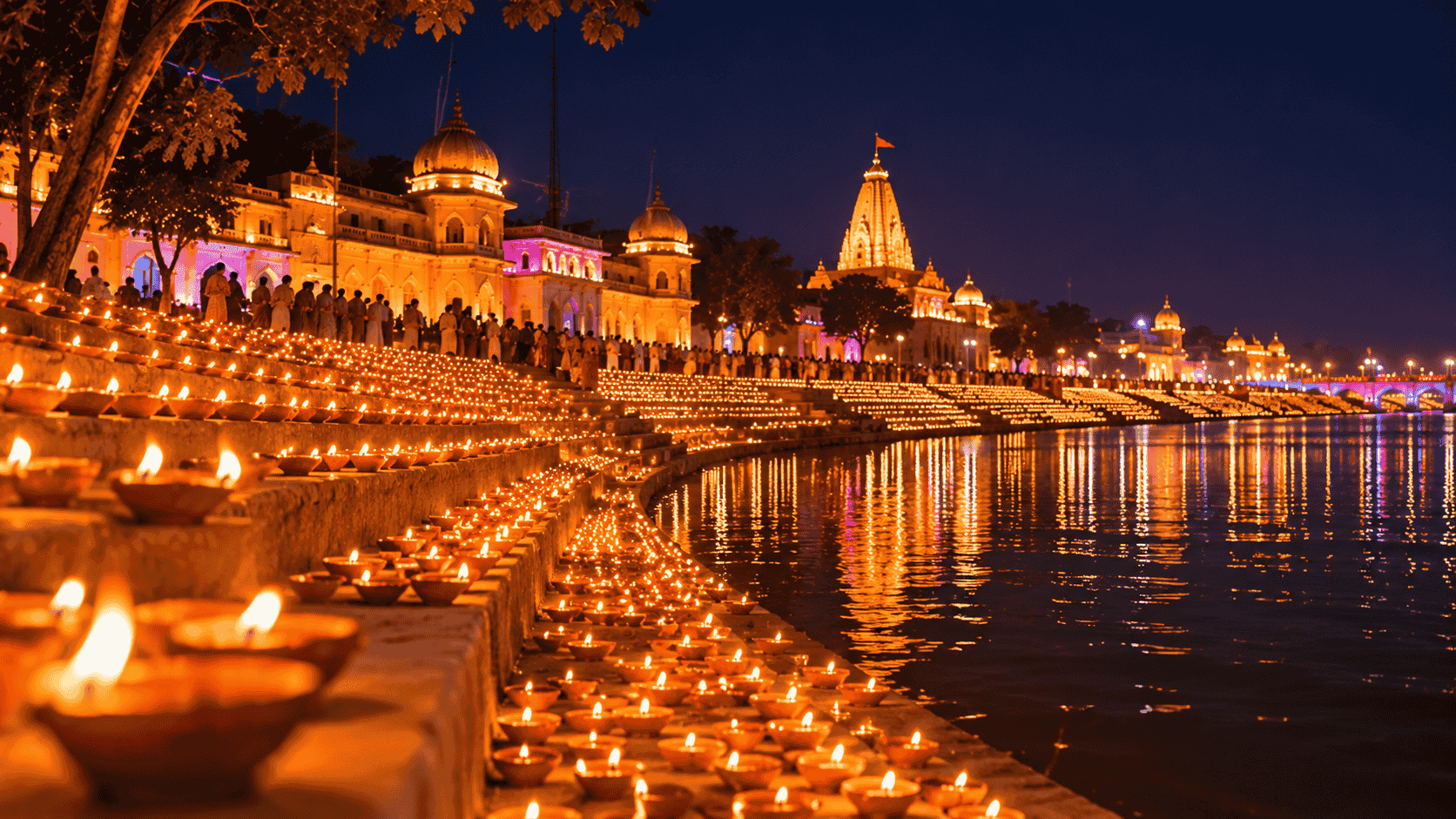
Ayodhya Deepotsav has become one of the most anticipated Diwali celebrations in India. On the evening of Choti Diwali, lakhs of earthen diyas light the ghats of the Saryu, turning the riverfront into a continuous ribbon of flame that marks the return of Lord Ram.
In 2026 the main Deepotsav evening falls on Saturday, 7 November, with Diwali itself on Sunday, 8 November. This guide covers the dates, the key viewing locations, temples to include, how to move around the city, and practical notes on where to stay in Ayodhya during Deepotsav so visitors can plan a focused and manageable trip.
Ayodhya Deepotsav 2026 Dates
The principal Deepotsav lighting takes place on the evening of Saturday, 7 November 2026 (Narak Chaturdashi / Choti Diwali). Diwali and Lakshmi Puja fall on Sunday, 8 November 2026.
Cultural programmes, processions and related events typically begin a few days earlier and continue around the main weekend. The densest crowds and the largest coordinated diya lighting occur on the evening of 7 November along Ram Ki Paidi and the surrounding Saryu ghats.

What Happens During Deepotsav
The centrepiece is the simultaneous lighting of hundreds of thousands of earthen diyas across Ram Ki Paidi and dozens of ghats along the Saryu. Volunteers arrange the lamps in the days before; at dusk they are lit in a coordinated window so the entire riverfront comes alive together.
Supporting events usually include a Ramayana-themed Shobha Yatra, a grand Saryu Maha Aarti performed by a large number of priests, and evening light, laser or drone shows over the river. Cultural programmes and tableaux are often staged at Ram Katha Park and other public spaces in the days leading up to the main night.
The combination of traditional ritual and large-scale public spectacle makes Deepotsav distinct from a regular temple visit.

Best Places to Experience the Diya Lighting
Ram Ki Paidi and the Saryu Ghats
Ram Ki Paidi is the heart of the Deepotsav display. The long stretch of stepped ghats is covered with diyas, creating the most recognisable image of the festival. Access to the main ghat steps is usually controlled on the evening of the lighting; the public views the spectacle from designated points along the river, from the opposite bank, and from elevated positions such as bridges.
Arriving early in the afternoon on 7 November is essential. Roads near the riverfront begin to close as the evening approaches, and the best vantage points fill quickly.
Viewing from the Opposite Bank and Bridges
Many visitors find clearer overall views from the Naya Ghat side or other points across the Saryu, looking back toward Ram Ki Paidi. Bridges also offer elevated perspectives of the illuminated crescent of ghats. These locations reduce the pressure of being inside the densest pedestrian zones while still delivering the full visual impact.
Surrounding Temple and City Illumination
Beyond the riverfront, major temples and approach roads are decorated and lit. The wider city atmosphere on the evenings of 7 and 8 November forms part of the overall Deepotsav experience.
Temples and Places to Visit During the Festival
Most visitors combine the riverfront spectacle with darshan at the principal temples.
Shri Ram Janmabhoomi Temple is the focal point of contemporary Ayodhya. During the Deepotsav and Diwali weekend, it receives extremely high footfall. Early morning slots and careful attention to current entry guidelines help manage the experience.
Hanuman Garhi, the hilltop temple dedicated to Hanuman, offers both darshan and elevated views over parts of the city. Kanak Bhawan, associated with Sita and Ram, is another frequently visited stop. Quieter daylight hours on the days around the main evening allow more comfortable temple visits before or after the riverfront focus.
A short walk or short ride between the temple cluster and the Saryu area is usually sufficient for a combined itinerary.
How to Reach and Move Around Ayodhya
Ayodhya is well connected by road, rail and air. The nearest major airport is in Lucknow, with road transfers of roughly two to three hours. Direct trains and long-distance buses also serve the city. During the Deepotsav weekend, extra services and temporary arrangements are commonly introduced to handle the influx.
Inside the city, the core zones around the Ram Mandir area and the Saryu ghats become heavily restricted on the main evening. Walking and designated shuttle or shared transport are the practical options once private vehicles are limited. Keeping plans flexible and allowing extra time for movement is essential.
Where to Stay in Ayodhya During Deepotsav
Accommodation demand rises sharply in the days around 7 and 8 November. Staying within reasonable reach of the main temple and riverfront zones reduces daily travel, but properties slightly away from the densest core can offer easier access and quieter nights.
When looking for where to stay in Ayodhya during Deepotsav, prioritise recent feedback on location, late-night return options, and how close the property sits to the key circuits. Booking well in advance is strongly advisable. Platforms such as Goroomgo help compare available stays and filter by practical location so the base supports rather than complicates the festival schedule.
Practical Tips for Visitors
Expect dense crowds on the evening of 7 November. Comfortable footwear, light layers, water and minimal belongings make the long standing and walking periods more manageable. Mobile networks can slow under heavy load; offline maps or a simple written plan of meeting points help groups stay coordinated.
Respect restricted zones and follow police and volunteer directions. Photography is common, but flash and intrusive behaviour near rituals should be avoided. Combining an early temple visit with a later riverfront position usually works better than attempting everything in the same peak hours.
Conclusion
Ayodhya Deepotsav 2026 centres on the evening of 7 November, when the Saryu ghats and Ram Ki Paidi are illuminated by lakhs of diyas. The main lighting, the Saryu aarti and the surrounding cultural programme create a distinctive Diwali atmosphere that draws devotees and travellers from across the country.
A clear plan that balances temple darshan, a good viewing position for the diyas, and a well-chosen base turns the visit into a focused spiritual and visual experience rather than a logistical struggle. With the dates fixed and the key locations understood, Deepotsav becomes one of the most memorable ways to mark Diwali in Ayodhya.

Written by Kunal Paul
Travel Expert
Kunal Paul is a Travel Expert who turns journeys into memorable experiences. With a passion for discovering destinations, local culture, hidden gems, and practical travel insights, he helps travelers explore smarter and better.