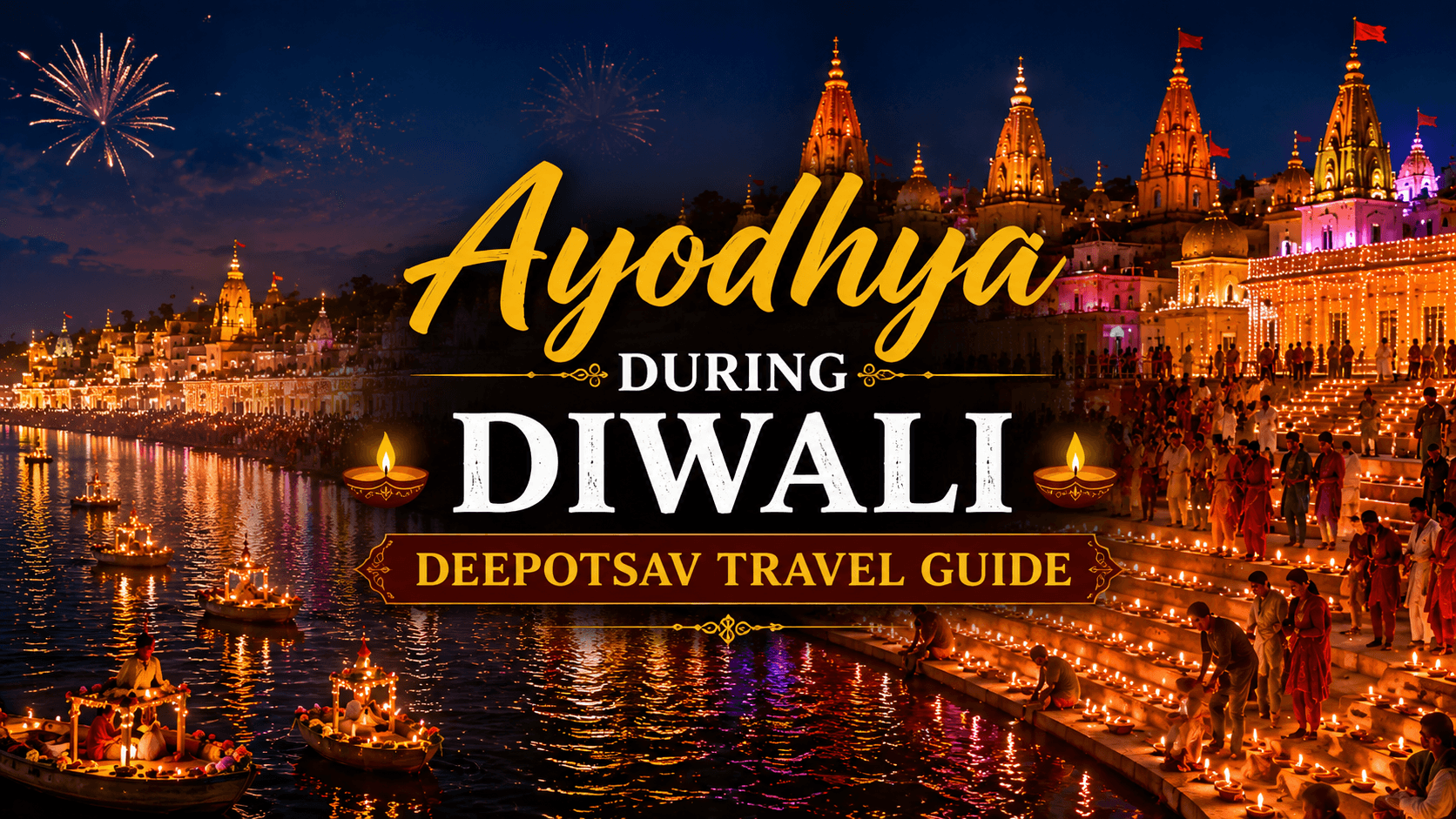
Ayodhya takes on a remarkable atmosphere during Diwali, when the ancient city of Lord Ram becomes the setting for one of India’s most visually striking festive celebrations. The Ayodhya Deepotsav combines illuminated ghats, thousands of earthen lamps, devotional ceremonies, cultural performances, and a strong sense of community celebration along the Sarayu River.
For travellers, Diwali is also one of the busiest periods to visit Ayodhya. Streets around Ram Mandir, Ram Ki Paidi, Hanuman Garhi, and the old city become exceptionally crowded, while hotels and transport can see high demand. Planning accommodation, local transport, sightseeing priorities, and entry or crowd-management requirements in advance can make the experience considerably easier.
This guide explains what to expect from Deepotsav Ayodhya, where to experience the celebrations, how to plan your sightseeing, where to stay, and how to make the most of a festive trip without spending the entire day in crowded areas.
What Makes Ayodhya Deepotsav Special?
Diwali in Ayodhya is closely associated with the traditional story of Lord Ram’s return to Ayodhya after his exile. The city’s modern Deepotsav celebrations have developed this connection into a large-scale cultural and devotional event centred around the Sarayu River and important religious landmarks.
The most memorable experience is often not a single ceremony but the transformation of the city after sunset. Diyas illuminate riverfront areas, temples glow against the evening sky, and devotional music and cultural programmes create a festive atmosphere throughout the city.
Ram Ki Paidi is particularly significant. The series of steps along the Sarayu becomes an important gathering point, with lamps creating a spectacular riverfront setting. Visitors can combine the evening experience with a peaceful walk along the ghats, although movement can become difficult during peak hours.
The celebration also gives travellers an opportunity to see Ayodhya beyond its major temples. Local markets, traditional food stalls, decorated streets, religious processions, and cultural performances contribute to the character of the festival.
Best Places to Experience Deepotsav Ayodhya
Ram Ki Paidi and Sarayu Riverfront
Ram Ki Paidi is one of the key locations associated with the city’s Diwali celebrations. The ghats provide a natural setting for observing the illuminated riverfront and evening devotional atmosphere.
If you want to experience the lamps at their most atmospheric, plan to reach the area well before sunset. Waiting until the last moment can make access difficult because visitor numbers increase rapidly around the evening programme.
The Sarayu riverfront is also suitable for travellers who want to experience the spiritual side of Ayodhya without continuously moving between temples.
Ram Mandir
The Ram Mandir has become one of Ayodhya’s defining landmarks and is naturally high on the itinerary of visitors travelling during Diwali.
Because the temple area can become exceptionally busy during the festival period, treat the temple visit as a separate sightseeing activity rather than trying to combine it with the peak Deepotsav viewing period.
Check the latest visitor instructions, security requirements, and operating arrangements before travelling. Keep identification documents accessible and avoid carrying unnecessary items into heavily regulated areas.
Hanuman Garhi
Hanuman Garhi is another important religious landmark in Ayodhya. The temple is located in the heart of the city and is traditionally visited by pilgrims before or alongside other major religious sites.
The climb to the temple adds a physical element to the visit, so comfortable footwear is useful. During Diwali, expect queues and slower movement around the surrounding lanes.
Kanak Bhawan
Kanak Bhawan offers a different experience from the large riverfront celebrations. Known for its ornate temple architecture and devotional significance, it is worth including in a daytime itinerary.
Visiting such temples earlier in the day allows you to reserve the evening for the Deepotsav atmosphere rather than rushing between attractions.
Ayodhya's Old Streets and Local Markets
One of the easiest ways to understand the festive character of Ayodhya is to walk through its older neighbourhoods and markets. During Diwali, shops are decorated, sweets are widely available, and traditional religious items become prominent.
Look for local sweets, diyas, decorative items, flowers, and small handicrafts. Shopping from local vendors also adds a more personal dimension to the trip than visiting only major tourist attractions.
How to Plan Your Ayodhya Diwali Itinerary
A well-planned itinerary should separate religious sightseeing from the main evening celebration.
Morning: Temple Circuit
Start early with Ram Mandir, Hanuman Garhi, Kanak Bhawan, and other nearby religious landmarks. Early mornings are generally more comfortable for walking and allow you to complete major sightseeing before the afternoon crowds intensify.
Keep some flexibility in your schedule. During festival periods, security checks, queues, road restrictions, and pedestrian diversions can increase travel time.
Afternoon: Rest and Local Exploration
Return to your accommodation during the afternoon, particularly if you are travelling with children or elderly family members. Diwali sightseeing can involve considerable walking and standing.
Later, explore nearby markets or enjoy local food before heading towards the riverfront.
Evening: Deepotsav Experience
For the main Ayodhya Deepotsav experience, plan to reach your intended viewing area significantly before the busiest period. Carry only essentials and follow instructions from local authorities and event personnel.
Rather than attempting to cover multiple locations after sunset, choose one principal viewing area and enjoy the atmosphere. This approach is much less stressful and allows you to appreciate the illumination, ceremonies, music, and riverfront setting.
Practical Travel Tips for Diwali in Ayodhya
- Diwali is not a normal sightseeing period in Ayodhya. The city can experience a substantial increase in visitors, so practical preparation matters.
- Book accommodation early: Hotels can fill quickly during the festival season. Compare location, cancellation conditions, guest reviews, and access to major attractions before booking.
- Expect traffic restrictions: Roads around major temples and event areas may be restricted or converted into pedestrian zones. Do not assume that a short distance on a map will mean a short journey during peak hours.
- Wear comfortable footwear: A large part of the Ayodhya experience involves walking, waiting, and navigating crowded streets.
- Carry limited luggage: Smaller bags are easier to manage around crowded religious areas and security checkpoints.
- Plan for children and seniors: If travelling with family, schedule breaks and avoid making the entire day dependent on reaching several attractions at fixed times.
- Carry some cash: Digital payments are widely useful, but small vendors and roadside stalls may still prefer cash.
Respect local customs: Ayodhya is a major pilgrimage destination. Dress comfortably and respectfully, follow temple rules, and avoid obstructing religious ceremonies while taking photographs.
Check official updates: Festival arrangements, traffic diversions, access rules, and event schedules can change. Verify the latest information close to your travel date.
Where to Stay During Deepotsav Ayodhya
Choosing the right location can make a major difference during Diwali. Staying close to the main attractions may reduce travel time, but properties in central areas can also be affected by crowding and traffic restrictions.
Near Ram Mandir and Central Ayodhya
This area suits travellers who prioritise temple access and want to stay close to the historic and religious core. It can work particularly well for pilgrims and first-time visitors.
The trade-off is that roads and pedestrian areas can become extremely busy during Deepotsav.
Near Ayodhya Dham Railway Station
For travellers arriving by train, accommodation around Ayodhya Dham Railway Station can provide practical connectivity. It can also be convenient for visitors planning short trips or onward travel.
However, check the actual distance and local transport options rather than choosing a hotel solely because it is listed as being near the station.
Faizabad Area
The wider Faizabad side can offer another accommodation option, particularly when central Ayodhya properties have limited availability. It may suit travellers looking for easier road access and a somewhat broader selection of hotels.
When comparing properties, consider the distance to the attractions you actually plan to visit rather than simply choosing the lowest room rate.
Goroomgo can be used to explore hotel options in Ayodhya and compare properties based on location, pricing, amenities, and booking conditions. For a festival trip, pay particular attention to cancellation terms and the property's practical access to your planned sightseeing areas.
Food and Local Experiences During Diwali
A Diwali visit is incomplete without trying some local festive flavours. Ayodhya's food scene includes North Indian vegetarian dishes, traditional sweets, snacks, and simple meals suitable for pilgrims.
Try local sweets and savouries from established shops, particularly during the daytime when markets are easier to navigate. Kachori, poori-based meals, chaat, lassi, and seasonal sweets can be part of the local food experience.
Travellers should remember that restaurants and food stalls may become much busier around major religious events. Keeping meal times slightly flexible can help.
Beyond food, consider spending time beside the Sarayu, observing evening prayers, exploring local markets, and experiencing the city's devotional atmosphere. These quieter moments can become as memorable as the headline celebration itself.
Nearby Places to Add to Your Ayodhya Trip
If you have more than a couple of days, Ayodhya can be combined with nearby religious and cultural destinations.
- Guptar Ghat is associated with the Sarayu and offers a comparatively calmer riverfront experience away from the most concentrated festival crowds.
- Sita Ki Rasoi is another religiously significant location that can be incorporated into a broader Ayodhya sightseeing route.
- Prayagraj can be considered for a longer Uttar Pradesh itinerary, particularly for travellers interested in the region's major pilgrimage destinations.
Varanasi is another natural extension for travellers planning a wider spiritual journey through Uttar Pradesh. The two cities offer very different experiences: Ayodhya centres strongly on Ramayana traditions and Ayodhya's religious heritage, while Varanasi is shaped by the Ganga, its ghats, and Shiva traditions.
A Better Way to Experience Diwali in Ayodhya
The biggest mistake visitors can make is treating Deepotsav like an ordinary tourist attraction that can be reached at the last minute.
Instead, build your day around the festival. Finish major temple visits early, return to your hotel for a break, carry only essentials, and reach your chosen evening location well ahead of peak crowds.
Most importantly, allow time to simply experience Ayodhya. The illuminated ghats, temple bells, devotional music, decorated streets, and gatherings along the Sarayu create an atmosphere that cannot be replicated through a checklist of attractions.
A Diwali trip to Ayodhya offers much more than a spectacular display of lamps. The festival brings together the city's religious heritage, the Sarayu riverfront, historic temples, local markets, traditional food, and a powerful sense of community celebration. The Ayodhya Deepotsav experience is particularly rewarding when travellers plan around crowds rather than trying to avoid them completely.
Book your hotel early, choose accommodation based on both location and accessibility, complete major temple visits during the quieter parts of the day, and reserve the evening for the Deepotsav atmosphere. With practical planning and realistic expectations about crowds, Deepotsav Ayodhya can become a memorable part of a wider Uttar Pradesh pilgrimage or family holiday.
Written by Goroomgo Editorial Team
Travel Writers & Hospitality Experts
We are dedicated to bringing you the best budget travel tips, hotel reviews, destination guides, and stories to inspire your next adventure across India.
