Winter changes the personality of Gangtok. The busy hill capital of Sikkim becomes quieter in the early morning, the air turns sharply cold, and clear days can open up sweeping views across the surrounding Himalayan landscape. Cafés feel warmer, monastery visits become more atmospheric, and an evening walk along MG Marg becomes an experience.
For travelers planning Gangtok in winter, however, there is one important distinction to understand: winter in Gangtok does not automatically mean snow in the city. The capital can remain cold and clear while heavier snow settles at higher elevations around destinations such as Tsomgo Lake and Nathula Pass, when weather and road conditions allow.
That makes winter travel to Gangtok less about waiting for snow outside your hotel and more about planning the right combination of city experiences and high-altitude excursions. From choosing the right month and packing intelligently to understanding permits, road conditions and where to stay, this guide covers what you actually need to know before planning a winter escape to Sikkim's capital.
Why Visit Gangtok in Winter?
There is a particular appeal to visiting Gangtok when the temperature drops.
The city feels more intimate. Morning walks are quieter, mountain viewpoints can be exceptionally rewarding on clear days, and the cold weather encourages travelers to slow down rather than rush from one attraction to another.
Winter is also a strong season for travelers who want to combine several sides of Sikkim in one trip. You can spend one day exploring Buddhist heritage and Gangtok's markets, another heading toward snow-covered high-altitude landscapes, and another simply enjoying the city.
The biggest attraction is visibility. On favorable days, winter's clearer conditions can create beautiful mountain vistas, especially from elevated viewpoints such as Ganesh Tok and Hanuman Tok.
But winter also demands more planning. Temperatures fall rapidly after sunset, mountain roads can become challenging, and high-altitude excursions may depend on permits and weather conditions.
The reward is a trip that feels considerably different from a conventional summer hill-station holiday.
Gangtok Winter Weather: What the Season Really Feels Like
Winter generally extends from December through February, with January typically feeling the coldest.
During sunny afternoons, walking around Gangtok can be comfortable with a jacket or layered clothing. Early mornings and evenings are another story. Once the sun disappears behind the hills, the temperature can drop quickly, making a warm jacket, thermal layer and proper socks essential.
December: Festive and increasingly cold
December brings a noticeable winter chill without necessarily making the entire city difficult to explore. The Christmas and New Year period can make Gangtok livelier, particularly around MG Marg.
This is a good time for travelers who want a combination of winter atmosphere, sightseeing and festive activity. However, holiday demand can push up accommodation and transport demand, so advance planning is advisable.
January: The true winter experience
January is for travelers who genuinely enjoy cold mountain weather.
Mornings can be particularly chilly, while high-altitude excursions can be considerably colder than Gangtok itself. If snow is your priority, this is one of the months when you may have a better chance of encountering winter conditions at higher elevations, although nothing should be treated as guaranteed.
February: Cold mornings, easier days
February gradually becomes more comfortable as the month progresses. The beginning can still feel properly wintry, while later weeks may offer a useful balance between cold-weather atmosphere and easier sightseeing.
For travelers who want winter without making extreme cold the central feature of the trip, late February can be worth considering.
Snowfall in Gangtok: Where Should You Actually Go?
Let's address the biggest expectation first: snowfall in Gangtok is not something you should assume will happen during every winter visit.
Snowfall directly in the city is occasional. Gangtok's elevation and local weather conditions mean that travelers can experience a very cold winter day without seeing snow on MG Marg or outside their hotel.
The more reliable strategy is to use Gangtok as your base for exploring higher-altitude Sikkim.

Tsomgo Lake
Tsomgo Lake is one of the most popular winter excursions from Gangtok. Situated at a significantly higher elevation, the area can become dramatically colder and snow-covered during winter.
The landscape around the lake can look completely different from central Gangtok, which is precisely why it is such a popular addition to winter itineraries.
However, access is weather-dependent. Roads can be affected by snow and ice, and visitors need to follow the applicable permit and transportation requirements.
Nathula Pass
Nathula Pass is another major attraction for travelers hoping to experience snow and high-altitude Himalayan scenery.
The important point is that Nathula is not simply another sightseeing stop that can always be added to an itinerary. Access is regulated, permits are required, and weather or road conditions can affect whether the journey goes ahead.
If the pass is inaccessible during your visit, do not consider the trip a failure. Winter in Sikkim is about responding to mountain conditions rather than forcing a fixed itinerary.
Baba Harbhajan Singh Temple
Often included in high-altitude excursions, the Baba Harbhajan Singh Temple provides another opportunity to experience the dramatically different landscape around the Tsomgo–Nathula region.
Expect stronger winds, lower temperatures and potentially snow-covered surroundings compared with Gangtok.
In other words, if your dream of snowfall in Gangtok is really a dream of walking through a snowy Himalayan landscape, plan beyond the city.
What to Do in Gangtok When the Snow Is Not Falling
A common mistake is to build a winter trip entirely around snow.
Gangtok has enough character to make the trip worthwhile even when the city remains snow-free.
Spend an evening on MG Marg
MG Marg is where Gangtok feels most sociable. The pedestrian street brings together cafés, restaurants, shops and travelers, making it an ideal place to spend a relaxed evening.
Winter gives the promenade a different mood. After a cold day outdoors, sitting down for a hot meal or tea is part of the experience rather than simply a break between attractions.
Visit Enchey Monastery
Enchey Monastery is close enough to central Gangtok to fit easily into a city sightseeing day. Its setting and Buddhist heritage offer a quieter counterpoint to the activity around MG Marg.
Go without rushing. Winter is a good season for giving these cultural sites the time they deserve.
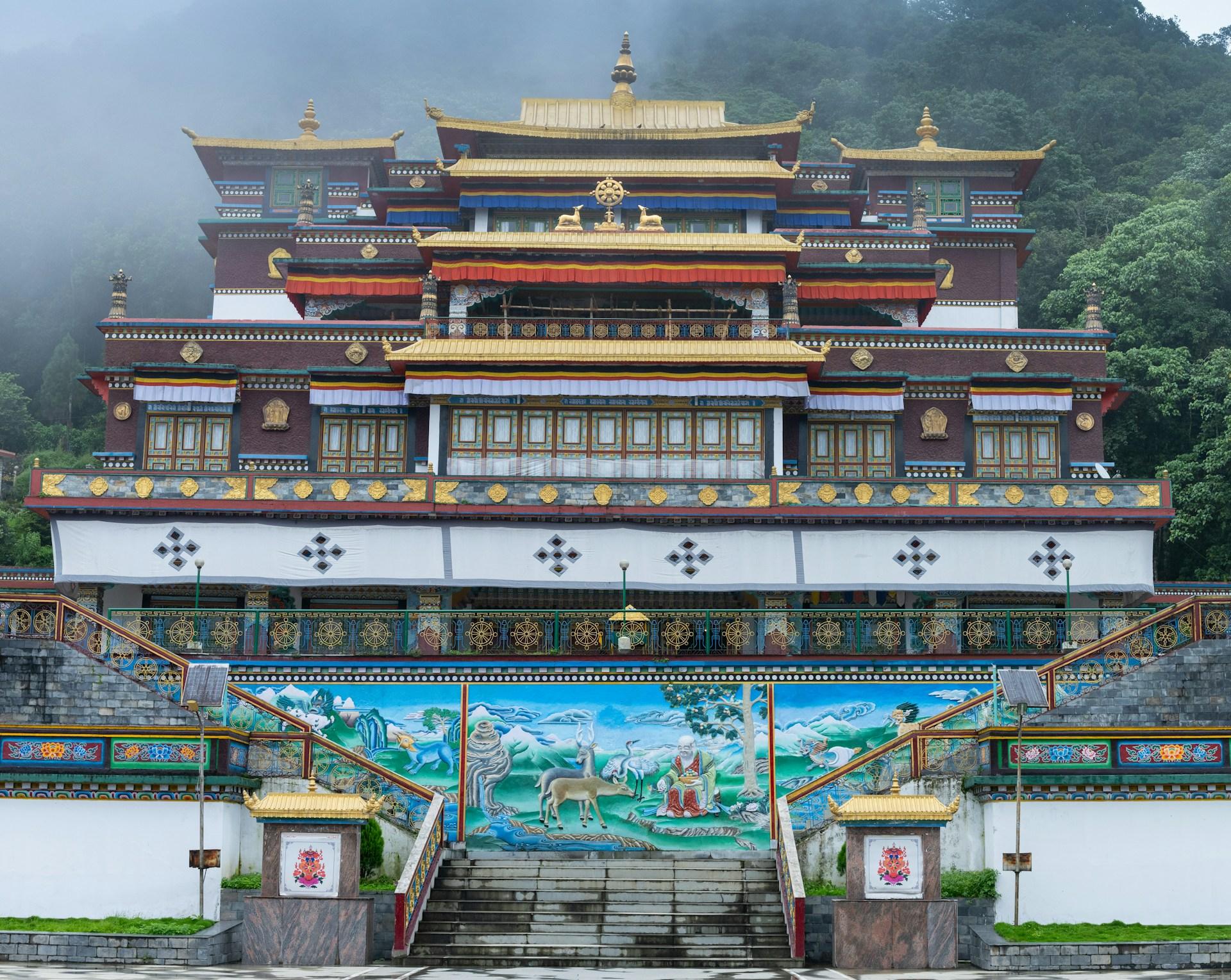
Explore Rumtek Monastery
Rumtek Monastery is a worthwhile excursion for travelers interested in Sikkim's Buddhist traditions and architecture.
Rather than treating it as a quick photo stop, allow enough time for the journey and surroundings. The route itself becomes part of the experience as Gangtok's urban landscape gives way to a more rural mountain setting.
Chase the views from Ganesh Tok and Hanuman Tok
These viewpoints can be particularly rewarding on clear winter days.
Visit earlier in the day when visibility is favorable, and keep your warm layers handy. The temperature at an exposed viewpoint can feel significantly colder than it does in the city.
Eat your way through winter
Cold weather changes what you want to eat.
This is the season to seek out steaming bowls of thukpa, freshly prepared momos and other warm local and Tibetan-influenced dishes. A relaxed meal after sightseeing can become one of the memorable parts of the trip.
A Better Way to Plan a Winter Gangtok Itinerary
Instead of trying to cover every attraction, build the trip around three layers: Gangtok city, cultural experiences and high-altitude adventure.
A three-day plan could look like this:
Day 1 — Discover Gangtok:
Arrive, settle into your hotel and explore MG Marg. If time allows, visit Enchey Monastery and nearby viewpoints. Keep the evening relaxed.
Day 2 — Head toward the snow:
Plan a Tsomgo Lake excursion and, if permitted and operational, continue toward the higher-altitude attractions. Start early and expect the day to be weather-dependent.
Day 3 — Slow down:
Visit Rumtek Monastery or explore another local attraction before spending your final evening in Gangtok. Keep the day flexible if you have an onward journey.
This approach works because it gives the mountain weather room to interfere without ruining your entire holiday.
Winter Travel Tips That Can Save Your Trip
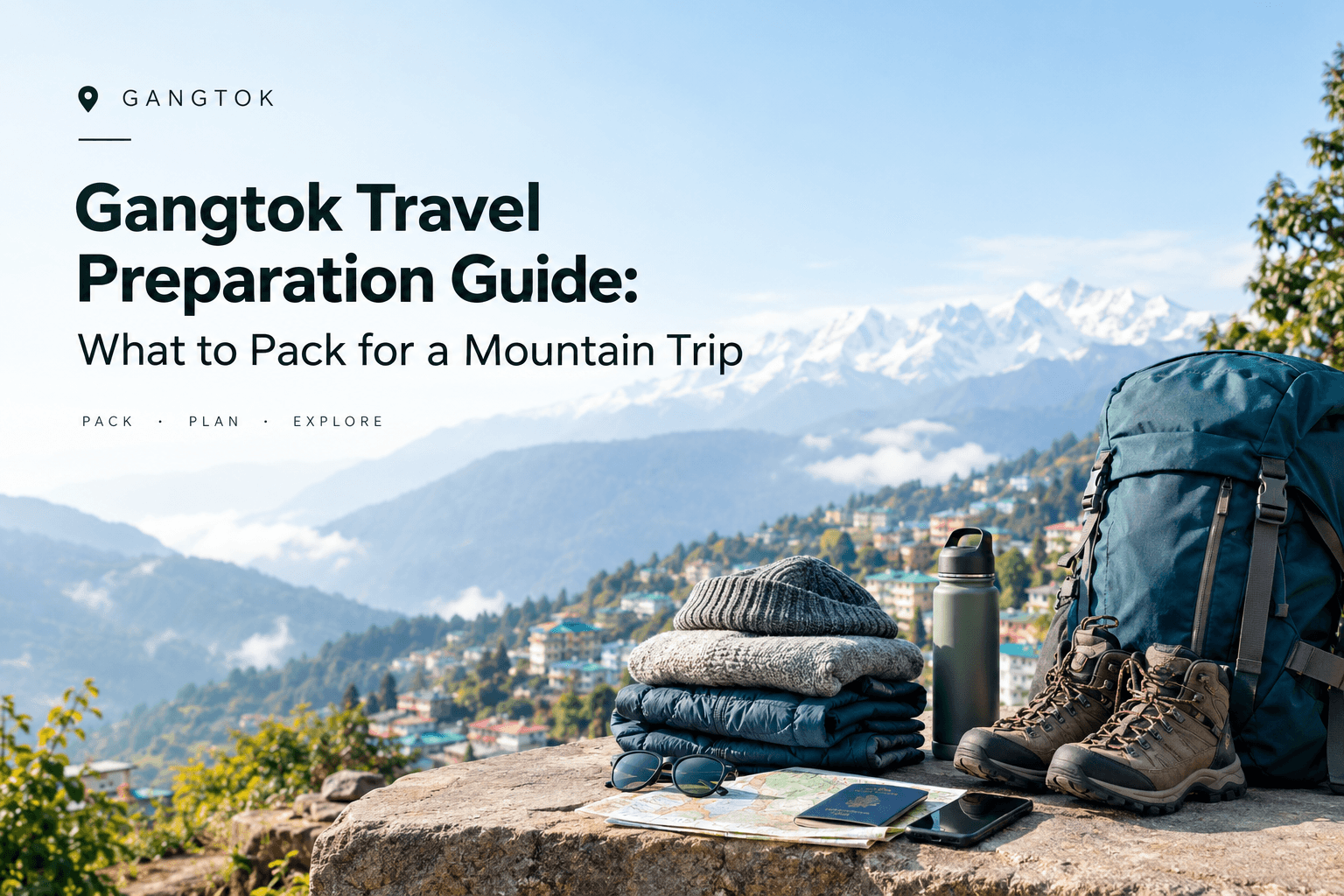
Pack in layers, not just one heavy jacket
A thermal base layer, sweater or fleece, insulated jacket, warm socks, gloves and a cap are more practical than relying on a single thick coat.
Carry comfortable shoes with good grip, especially if your itinerary includes higher-altitude areas.
Do not underestimate the sun
Cold weather does not mean weak sunlight. Sunglasses and sunscreen are useful during clear mountain days, particularly at higher elevations.
Keep permits and identification ready
Restricted and high-altitude destinations require regulated access. Carry the required identification documents and confirm arrangements before leaving Gangtok.
Do not assume that a destination listed in an online itinerary will necessarily be accessible on the day you travel.
Leave buffer time
Mountain journeys are rarely as predictable as city transfers.
A road closure, weather change, traffic delay or permit-related issue can affect your schedule. Avoid booking a flight or train connection immediately after a long high-altitude excursion.
Don't make snowfall the only success metric
This is perhaps the most useful piece of advice.
You may visit during a very cold week and never see snow in central Gangtok. That does not mean you chose the wrong season.
Clear Himalayan views, monasteries, winter food, quiet mornings and the possibility of snow at higher elevations are all part of the experience.
How to Reach Gangtok During Winter
Gangtok has no commercial railway station or major airport of its own.
For air travelers, Pakyong Airport is the closest airport serving the region, although flight schedules and operations can be affected by mountain weather. Bagdogra Airport in West Bengal remains another important gateway for travelers heading toward Sikkim.
Rail travelers commonly use New Jalpaiguri (NJP) and continue by road.
From Bagdogra or NJP, private taxis, shared vehicles and organized transfers are commonly used for the journey to Gangtok.
Winter travelers should avoid making overly tight connection plans. Road travel through the hills takes time, and conditions can change.
For excursions toward Tsomgo Lake and Nathula Pass, use the appropriate authorized transportation and permit arrangements rather than treating the journey like an independent road trip.
Where to Stay in Gangtok in Winter
Your choice of neighborhood matters more during winter because returning to your hotel after sunset can feel very different from returning during warmer months.
MG Marg and central Gangtok
Best for first-time visitors, couples and travelers who want restaurants, cafés and shopping nearby.
Staying centrally means you can spend your evening outdoors without arranging a separate vehicle for every short outing.
Development Area
A quieter alternative while remaining relatively convenient for central sightseeing. It can work well for travelers who prefer a more relaxed hotel environment.
Tadong
Tadong offers a more local urban setting and can suit travelers looking for practical accommodation and access to surrounding areas.
When comparing hotels, don't focus only on room photographs and price. For a winter trip, check whether the property provides reliable hot water, adequate heating, comfortable bedding and convenient transport access.
Goroomgo can be useful for comparing accommodation options in Gangtok based on location, room features and booking conditions. For a winter holiday, a strategically located, comfortable hotel can make as much difference to the experience as the sightseeing itinerary itself.
The Gangtok Winter Experience Is About More Than Snow
The best winter trips to Gangtok are not necessarily the ones where every plan goes perfectly.
They are the ones where you wake up to a clear mountain morning, take a slow breakfast, visit a monastery, find a viewpoint with an open horizon, return to the city for hot momos and spend the evening walking through MG Marg wrapped in winter layers.
Snow may or may not appear in Gangtok itself. Higher elevations may open or close depending on the weather. Plans may shift.
That uncertainty is part of traveling through the Himalayas.
If you approach Gangtok in winter as a season of cold air, clearer mountain landscapes, cultural discovery and possible snow adventures rather than a guaranteed snowfall holiday, you are much more likely to enjoy what Sikkim offers.
Plan your high-altitude excursions carefully, leave room for weather changes, choose a comfortable base and let the mountains dictate some of the pace. That is when a winter trip to Gangtok starts feeling less like a checklist and more like a Himalayan escape
Written by Goroomgo Editorial Team
Travel Writers & Hospitality Experts
We are dedicated to bringing you the best budget travel tips, hotel reviews, destination guides, and stories to inspire your next adventure across India.