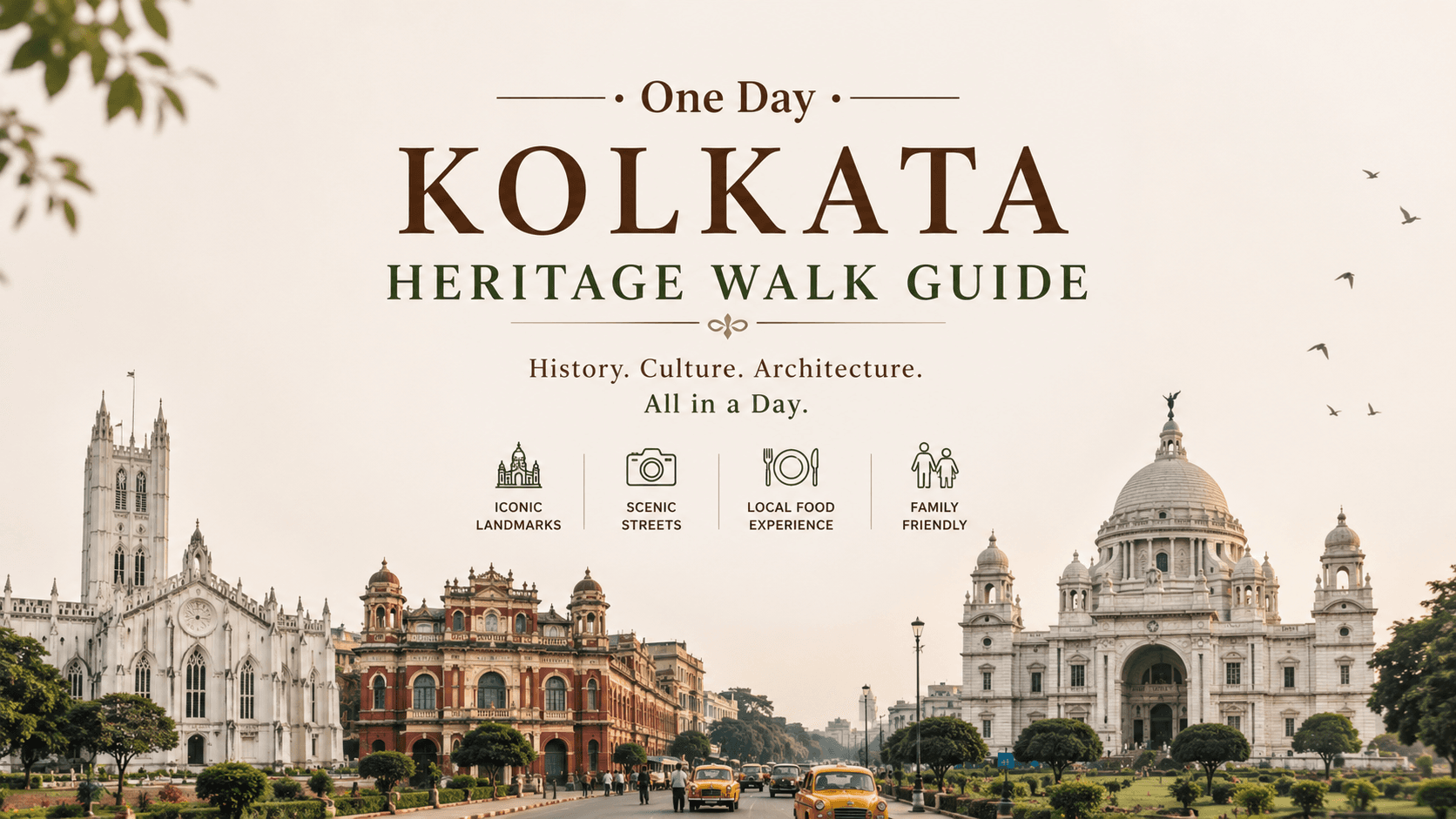
Kolkata is one of India’s most rewarding cities to explore on foot, especially when you want to understand its layered history beyond the usual sightseeing checklist. A well-planned Kolkata heritage walk can take you from grand colonial-era buildings and historic institutions to old markets, narrow lanes, religious landmarks and neighbourhoods where everyday city life continues against a centuries-old backdrop.
For families, a walking tour also offers a flexible way to experience Kolkata without spending the entire day travelling between attractions. The key is to choose a compact route, begin early, allow time for food and photographs, and use taxis or public transport between sections when needed.
This one-day guide focuses on central Kolkata, covering major heritage landmarks, colonial Kolkata attractions, local experiences and practical travel tips. Whether you are visiting Kolkata for the first time or travelling with children who need a mix of history, food and visual experiences, this itinerary helps you make the most of a single day.
Kolkata Heritage Walk: Where Should You Start?
For a one-day heritage itinerary, central Kolkata is the most practical starting point. The area around B.B.D. Bagh, Dalhousie Square, Esplanade and the older commercial districts contains an unusually dense collection of historic buildings.
Start your day around 8:00 AM near B.B.D. Bagh. Morning is preferable because the streets are generally more comfortable for walking than during the afternoon heat, particularly in warmer months.
1. B.B.D. Bagh and Dalhousie Square
B.B.D. Bagh, historically known as Dalhousie Square, is an excellent introduction to Kolkata’s architectural heritage. The surrounding streets reveal the scale of the city during the colonial period, with imposing administrative buildings, commercial offices and historic institutions.
Take some time to look beyond individual monuments. The real character of this area lies in the relationship between the buildings, broad streets and historic public spaces.
Among the important structures around the square are Writers’ Building, St. John’s Church, the General Post Office and the former colonial administrative buildings.
For families, this is a good first stop because there is plenty to see without requiring long walking distances between every landmark.
2. St. John’s Church
Continue towards St. John’s Church, one of Kolkata’s significant historic churches. Built in the late 18th century, it reflects the architectural and institutional history of the city during the British period.
The surrounding grounds also contain memorials and historic features, making the stop more interesting than a quick exterior photograph.
This is a useful place to slow down during your Kolkata heritage walk. Instead of trying to cover every landmark quickly, spend a few minutes understanding why these buildings were established and how Kolkata developed as a major administrative and commercial centre.
Explore Kolkata’s Colonial Architecture
The next part of the route brings you closer to some of the best-known colonial Kolkata attractions. This section is particularly rewarding for visitors interested in architecture and photography.
3. General Post Office
The General Post Office, commonly known as the GPO, is one of the most recognisable landmarks in central Kolkata. Its prominent dome and grand façade make it easy to identify from the surrounding streets.
The building stands near the historic site associated with the old Fort William, giving the area additional historical significance.
Even if you do not go inside, the exterior is worth seeing as part of the broader heritage landscape. Look at the scale and detailing of the structure compared with the much busier streets surrounding it today.

4. St. Andrew’s Church and Nearby Heritage Streets
As you move through the central business district, you will encounter additional historic buildings and churches. Some are less famous than Victoria Memorial or Howrah Bridge but help explain the multicultural character of old Kolkata.
This is where a heritage walk becomes more rewarding than a conventional sightseeing tour. Rather than moving from one famous attraction to another, you begin noticing architectural details, old signboards, balconies, columns and façades that might otherwise be missed from a vehicle.
Keep the pace comfortable if travelling with children. The objective is not to collect the maximum number of landmarks but to experience the historic character of central Kolkata.
5. St. Paul’s Cathedral and the Maidan Area
Depending on your walking pace, use a taxi or public transport to reach the St. Paul’s Cathedral and Maidan area rather than attempting to walk every section continuously.
St. Paul’s Cathedral is one of Kolkata’s best-known religious landmarks and is located close to several major attractions. The surrounding Maidan provides a welcome change from the dense urban environment of central Kolkata.
For families, the Maidan is particularly useful as a breathing space. Children can move around more freely while adults enjoy views of Kolkata’s historic skyline.
From here, you can continue towards the Victoria Memorial, one of the city’s most recognisable landmarks.
6. Victoria Memorial
No one-day Kolkata heritage itinerary feels complete without Victoria Memorial. Set within landscaped grounds, the white marble monument is one of the city’s defining architectural landmarks.
The building combines European and Indian influences and houses a museum collection covering different aspects of Kolkata and Indian history.
Allow at least an hour if you plan to explore the museum rather than simply photograph the exterior. Families should factor in additional time if children are interested in the galleries.
The surrounding gardens are also ideal for a short break. Rather than rushing through the monument, use this stop as the main cultural experience of the afternoon.
7. Indian Museum or a Short Break
If your family enjoys museums, consider adding the Indian Museum to the itinerary. It is one of the major museums in Kolkata and offers collections spanning archaeology, art, natural history and cultural heritage.
However, attempting both an extensive museum visit and a long walking route in one day can make the schedule tiring.
A better approach is to choose according to your family’s interests. Architecture lovers can spend more time around Victoria Memorial and central Kolkata, while children and museum enthusiasts may prefer allocating additional time to the Indian Museum.
This flexibility is important when planning a one-day itinerary. Kolkata rewards slower exploration.
8. New Market and the Flavours of Old Kolkata
By late afternoon, move towards New Market, officially Sir Stuart Hogg Market. The area offers a completely different perspective of the city.
After spending hours around formal colonial buildings, the energy of the market introduces you to Kolkata’s commercial and culinary culture. Explore the lanes, browse traditional shops and sample local snacks where appropriate.
For a family trip, keep food choices practical and hygienic, especially when travelling with younger children. Kolkata is famous for sweets and street food, but visitors should choose busy, well-maintained establishments rather than eating indiscriminately from every stall.
Try local favourites such as sandesh, mishti doi or a Bengali meal at a reputable restaurant.

9. College Street and the Cultural Side of Kolkata
If your family still has energy, finish the heritage experience around College Street. This area is associated with books, education and Kolkata’s intellectual culture.
The Indian Coffee House is another historic institution nearby, although families may prefer a shorter stop depending on the time available.
College Street demonstrates why Kolkata’s heritage cannot be understood only through grand colonial buildings. Its cultural identity also comes from universities, bookshops, publishing houses, cafés and generations of students.
This final section gives the day a more contemporary ending while maintaining the historical theme.
Practical Tips for a One-Day Kolkata Heritage Walk
Start Early
Begin around 8:00 AM whenever practical. The earlier part of the day is generally more comfortable for walking, photography and sightseeing.
Use a Mix of Walking and Transport
Do not treat the itinerary as a marathon. Central Kolkata is walkable in sections, but taxis, buses and the Kolkata Metro can save significant time between separate clusters.
For families, combining walking with short vehicle transfers is usually more comfortable.
Wear Comfortable Footwear
Historic neighbourhoods include uneven pavements, busy crossings and crowded streets. Comfortable walking shoes are far more useful than fashionable footwear.
Carry water, especially during warmer months.
Plan Around Weather
Kolkata’s weather can strongly affect a walking itinerary. The cooler months are generally more comfortable for extended outdoor exploration, while summer afternoons can be hot and humid.
During the monsoon, carry rain protection and keep some flexibility in the itinerary.
Avoid Overloading the Schedule
A common mistake is trying to visit Victoria Memorial, Indian Museum, Howrah Bridge, Kalighat, College Street, New Market and several other attractions in a single day.
That approach creates more travel time and less actual experience.
For one day, concentrate on central heritage districts and select one or two major attractions for longer visits.
Best Areas to Stay in Kolkata for a Heritage Trip
Choosing the right neighbourhood can make a one-day heritage itinerary considerably easier.
Esplanade and New Market are convenient for travellers who want quick access to central attractions, shopping and public transport.
Park Street is a strong choice for visitors who prefer a lively area with restaurants, cafés and good connectivity. It also provides convenient access to attractions around the Maidan.
Ballygunge can work well for families looking for a more residential atmosphere while remaining connected to central Kolkata.
For budget-conscious travellers, compare hotel locations rather than choosing purely on room price. A slightly better-connected property can reduce daily transport costs and sightseeing fatigue.
Goroomgo can be used to compare hotel options in Kolkata based on location, price and available amenities. The platform focuses on helping travellers discover and book accommodations across India, with options suited to family, leisure and other travel needs.
For SEO and internal-linking purposes, this section can naturally connect to the Hotels in Kolkata city page, individual hotel pages and related Kolkata travel guides.
Suggested One-Day Kolkata Heritage Itinerary
8:00 AM – 9:00 AM: B.B.D. Bagh and Dalhousie Square
9:00 AM – 10:00 AM: St. John’s Church and surrounding heritage buildings
10:00 AM – 11:00 AM: General Post Office and central colonial streets
11:15 AM – 12:30 PM: St. Paul’s Cathedral and Maidan
12:30 PM – 2:00 PM: Lunch and rest
2:00 PM – 3:30 PM: Victoria Memorial
3:30 PM – 4:30 PM: Indian Museum or relaxed time around the Maidan
5:00 PM – 6:30 PM: New Market
Optional evening: College Street or a traditional Bengali dinner
This schedule should be treated as a framework rather than a strict timetable. Attraction timings, traffic, weather and family preferences can all affect the actual pace.
Why a Heritage Walk Works So Well for Families
A family heritage trip to Kolkata does not have to feel like a history lesson. The city works because every few streets can introduce something different—grand architecture, markets, churches, food, books, public spaces and local neighbourhood life.
Children can photograph unusual buildings, observe busy markets and learn how Kolkata evolved from a colonial administrative centre into a modern cultural capital.
Adults, meanwhile, get the opportunity to appreciate architectural details and historical connections that are easy to miss during a conventional vehicle-based sightseeing tour.
The most successful approach is to leave enough room for spontaneous discoveries. Stop for a sweet, browse an old shop, photograph an interesting façade or take a short break whenever the family needs one.
Conclusion
A well-planned Kolkata heritage walk can turn a single day into an engaging introduction to the city’s history, architecture and everyday culture. Start around B.B.D. Bagh, explore the historic central district, continue towards the Maidan and Victoria Memorial, and finish the day among the markets and cultural institutions that give Kolkata its distinctive personality.
The city’s colonial Kolkata attractions are important, but they are only one part of the experience. The real appeal comes from seeing how historic buildings exist alongside markets, cafés, bookshops, religious institutions and modern city life.
For families, keep the itinerary flexible, combine walking with public transport, schedule regular breaks and avoid trying to cover too many attractions. Choose a convenient hotel through Goroomgo, keep your base close to your planned sightseeing area, and allow Kolkata’s streets to provide a few unexpected discoveries along the way.

Written by Kunal Paul
Travel Expert
Kunal Paul is a Travel Expert who turns journeys into memorable experiences. With a passion for discovering destinations, local culture, hidden gems, and practical travel insights, he helps travelers explore smarter and better.