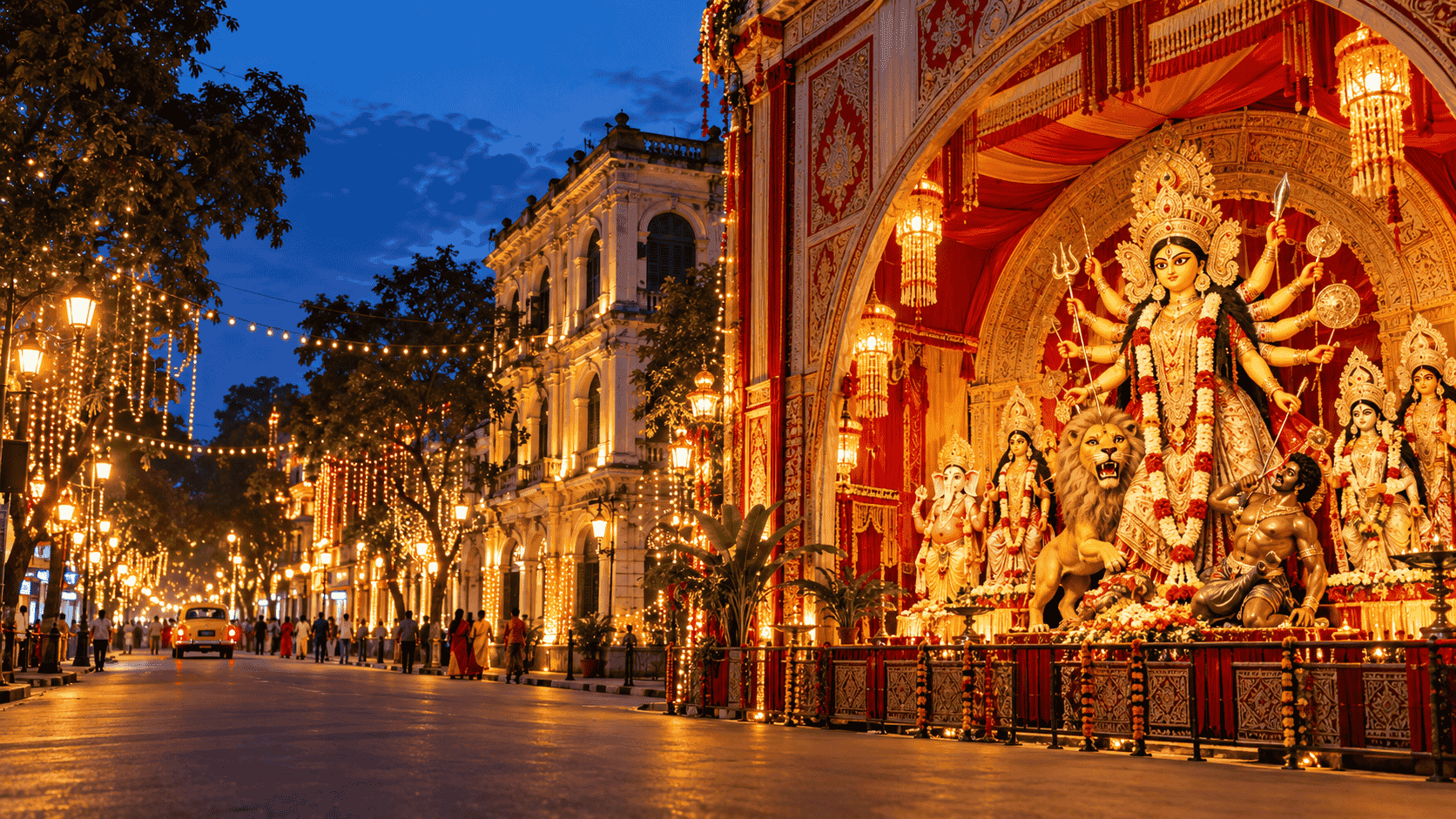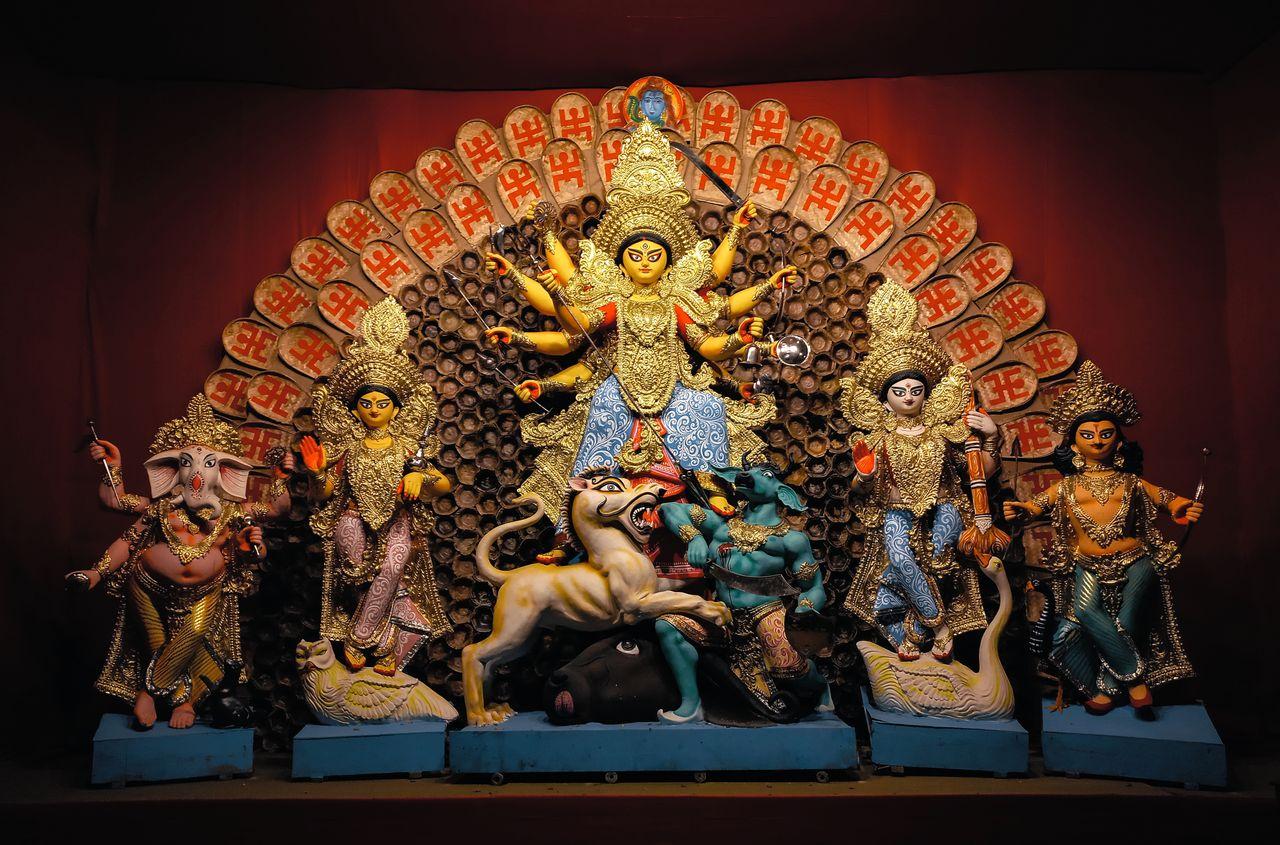
Every autumn Kolkata transforms. Streets fill with the sound of dhak, the scent of incense and the glow of lights that turn ordinary neighbourhoods into temporary art galleries. Durga Puja is not only a religious festival; it is the city’s largest public art event, with thousands of community-organised pandals competing for attention through theme, craftsmanship and sheer scale.
For 2026 the main days of Durga Puja fall in mid-to-late October. Mahalaya opens the festive period on 10 October, while the core ritual days run roughly from Shashthi (around 16–17 October) through Vijaya Dashami (around 20–21 October). The exact tithi can vary slightly by panjika, but the city is fully in festival mode for the better part of a week.
This guide focuses on the famous Durga Puja pandals in Kolkata that consistently draw the largest crowds and the strongest critical attention. It groups them by region so a Durga Puja pandal hopping guide feels practical rather than overwhelming, and it includes notes on where to stay so first-time visitors can base themselves sensibly.
Durga Puja 2026 Dates at a Glance
Mahalaya: 10 October 2026. Most large pandals begin receiving visitors from Panchami evening ( 15 October). The peak ritual days—Saptami, Ashtami and Navami—fall in the middle of the following week, with immersion processions on Dashami. Crowds are heaviest from late afternoon through the night on Ashtami and Navami. Visiting major pandals in the quieter pre-Shashthi window or in the early hours after midnight often means shorter queues.

North Kolkata: Heritage and Traditional Pandals
North Kolkata is where the city’s community puja tradition feels oldest. The lanes still carry the memory of earlier decades of barowari organisation, and many committees continue to prioritise classical idol form and neighbourhood participation over pure spectacle. For visitors who want to understand why Kolkata’s Puja is considered a living cultural practice rather than only a visual event, this part of the city is essential.
Bagbazar Sarbojanin
One of the most respected traditional barowari pujas in the city. Bagbazar prioritises classic form, community participation and a sense of continuity rather than spectacular theme architecture. It remains a must-visit Durga Puja pandal in Kolkata for anyone who wants to experience the older, more intimate side of the festival. The surrounding neighbourhood still feels like older Kolkata, and the combination of the pandal with the local streets adds depth that purely thematic installations sometimes lack.
Kumartuli Park and Kumartuli Sarbojanin
Located in the historic potters’ quarter where the majority of Kolkata’s clay idols are still made. The pandals here often lean into artistic or conceptual themes while remaining rooted in the craft tradition of the neighbourhood. Walking the lanes of Kumartuli itself, even outside the main pandal hours, adds context that no theme structure can fully replace.
Ahiritola and Nearby North Clusters
Ahiritola Sarbojanin and the surrounding pujas form a compact, walkable heritage belt. Combined with stops such as Tala Barowari or Nalin Sarkar Street, they create a strong North Kolkata evening without constant long transfers.
Central Kolkata: Scale and Storytelling
Santosh Mitra Square
Consistently among the most talked-about pandals. For 2026 the theme centres on Vande Mataram and elements of the freedom movement, with large-scale installations that attract both locals and visitors. Expect heavy crowds; planning an early or very late visit helps.
College Square
Famous for the reflection of lights across the waterbody beside the pandal. The combination of illumination and water makes it one of the most photogenic stops on any Durga Puja pandals 2026 circuit, especially after dark.
Mohammad Ali Park and Other Central Stops
Mohammad Ali Park has long been known for ambitious architectural recreations. Together with nearby central pujas it forms a natural cluster for visitors staying or transferring through the Sealdah–MG Road belt.
South Kolkata: Theme, Craft and Atmosphere
South Kolkata and its immediate extensions host many of the city’s most awarded and visually ambitious pandals. Themes here frequently draw from architecture, literature, environmental ideas or regional Indian culture, and the standard of lighting and interior detailing is consistently high. An evening spent moving between three or four well-chosen South Kolkata pandals often feels more complete than a longer but scattered list.
Suruchi Sangha (New Alipore)
Known for immersive cultural themes and careful craftsmanship. In recent years, the committee has focused on regional Indian traditions and artistic storytelling. It remains one of the must-visit Durga Puja pandals in Kolkata for visitors who prioritise design quality over pure size.
Ekdalia Evergreen Club
A long-standing South Kolkata institution. Themes frequently reference grand architecture or mythological narratives, and the lighting is usually among the strongest in the area.
Tridhara Sammilani, Badamtala Ashar Sangha and Nearby
Tridhara is respected for the fusion of traditional form with modern installation work. Badamtala Ashar Sangha and the surrounding Bhowanipore–Kalighat cluster reward a walking approach. Maddox Square adds a distinctly social, open-air atmosphere that many younger visitors treat as a destination in itself.
Chetla Agrani and Singhi Park / Ballygunge Cultural
These South Kolkata names regularly appear on shortlists for both artistic merit and consistent crowd appeal. Grouping two or three of them in one evening is more realistic than trying to cover the entire southern circuit in a single night.
East Kolkata, Lake Town and Salt Lake
Sreebhumi Sporting Club
One of the largest and most consistently spectacular pandals in the city. For 2026 the theme recreates Jaipur’s Hawa Mahal at impressive scale. Located in Lake Town, it draws visitors from across Kolkata and beyond; queues are long and the experience is deliberately grand. The combination of architectural ambition and heavy illumination means the experience is as much about the exterior approach and the surrounding crowd energy as it is about the interior. Arriving with realistic expectations about waiting time makes the visit more enjoyable.
Salt Lake Blocks and New Town
Several Salt Lake community pujas (often referred to by block names such as FD, BJ, EC or AK) and New Town Sarbojanin have built strong reputations for ambitious themes and organised visitor flow. They work well as a separate evening when North and South routes feel saturated.
A Practical Durga Puja Pandal Hopping Guide
Trying to see every famous name in one night is neither possible nor enjoyable. The Metro network and the natural clustering of pandals make regional evenings the most realistic strategy. Crossing from North to South on the same night during peak hours can consume more time in traffic than in actual viewing. Building rest, food stops and buffer time into each evening keeps the experience festive rather than exhausting.
• North Kolkata heritage (Kumartuli–Bagbazar–Ahiritola) on one evening
• Central (Santosh Mitra Square–College Square) on another
• South Kolkata theme circuit (Suruchi–Tridhara–Ekdalia and neighbours) on a third
• East / Salt Lake / Sreebhumi on a fourth if time allows
Use the Metro between clusters and walk within them. Roads close or become extremely slow during peak hours; a pre-booked cab for the final transfer of the night is often more reliable than relying on street availability. Comfortable shoes, light clothing and water matter more than most people expect.

Pre-Shashthi evenings and the hours after 1 or 2 a.m. usually offer the shortest waits at the biggest pandals. Ashtami and Navami nights are the most intense; plan fewer stops and more patience on those dates.
Where to Stay in Kolkata for Durga Puja
Location shapes how much of the festival you can actually experience. During Puja week many roads are restricted or heavily congested after dark, so a stay near a useful Metro station or within reasonable reach of two major clusters pays dividends. Central locations give flexibility; North or South bases reward visitors who plan to spend most evenings in one broad zone. Booking earlier than for a normal weekend is strongly advisable once the main dates approach.
Staying near a Metro line that connects several clusters reduces daily friction. Central and Park Street areas offer good access to both North and South circuits. North Kolkata bases suit visitors focused on heritage pujas and Kumartuli. South Kolkata or areas near Kalighat and Rashbehari work well for the theme-heavy southern route. Salt Lake or New Town bases make the eastern mega-pandals easier.
During the main Puja week demand for rooms rises sharply. Booking a budget friendly hotel in Kolkata or a mid-range property earlier than usual is advisable, especially if you want a location that supports evening hopping. When searching for where to stay in Kolkata for Durga Puja, prioritise proximity to a Metro station and realistic travel time to at least two of the major clusters you care about most.
Platforms such as Goroomgo make it easier to compare options across these zones so the stay supports the pandal itinerary rather than becoming another source of delay.
Practical Tips for Visiting the Famous Pandals
Carry only essentials. Large bags slow entry at many organised pandals. Respect photography rules; some interiors restrict flash or tripods. Local food stalls and temporary counters appear everywhere—chhena, phuchka, rolls and sweets are part of the experience, but keep hydration in mind during long walks.
VIP or priority entry arrangements exist at a number of the larger pandals and can significantly reduce waiting time on peak nights. Even without them, choosing less crowded hours makes a noticeable difference.
The festival is both devotional and spectacular. Moving slowly through one or two strong pandals often leaves a stronger impression than rushing past a dozen entrances. Many first-time visitors find that combining one heritage evening in the North with one high-impact theme evening in the South, plus a single major stop such as Sreebhumi, already delivers a representative experience of the famous Durga Puja pandals in Kolkata. Leaving space for unplanned neighbourhood discoveries often becomes the most memorable part of the week.
Conclusion
The famous Durga Puja pandals in Kolkata in 2026 continue the city’s tradition of turning devotion into public art. From the traditional continuity of Bagbazar and Kumartuli to the large-scale themes of Sreebhumi, Santosh Mitra Square and Suruchi Sangha, the range is wide enough that every visitor can shape a personal circuit.
A thoughtful Durga Puja pandals 2026 plan groups stops by neighbourhood, respects the intensity of the peak nights, and pairs the evenings with a practical place to stay. With the main dates falling in mid-to-late October, early planning for both rooms and evening routes turns the festival from overwhelming into memorable.
Whether you come for the heritage lanes of the North, the theme installations of the South, or the sheer scale of the eastern mega-pandals, Kolkata in Puja week rewards curiosity, comfortable shoes and a willingness to let the city set the pace.

Written by Kunal Paul
Travel Expert
Kunal Paul is a Travel Expert who turns journeys into memorable experiences. With a passion for discovering destinations, local culture, hidden gems, and practical travel insights, he helps travelers explore smarter and better.