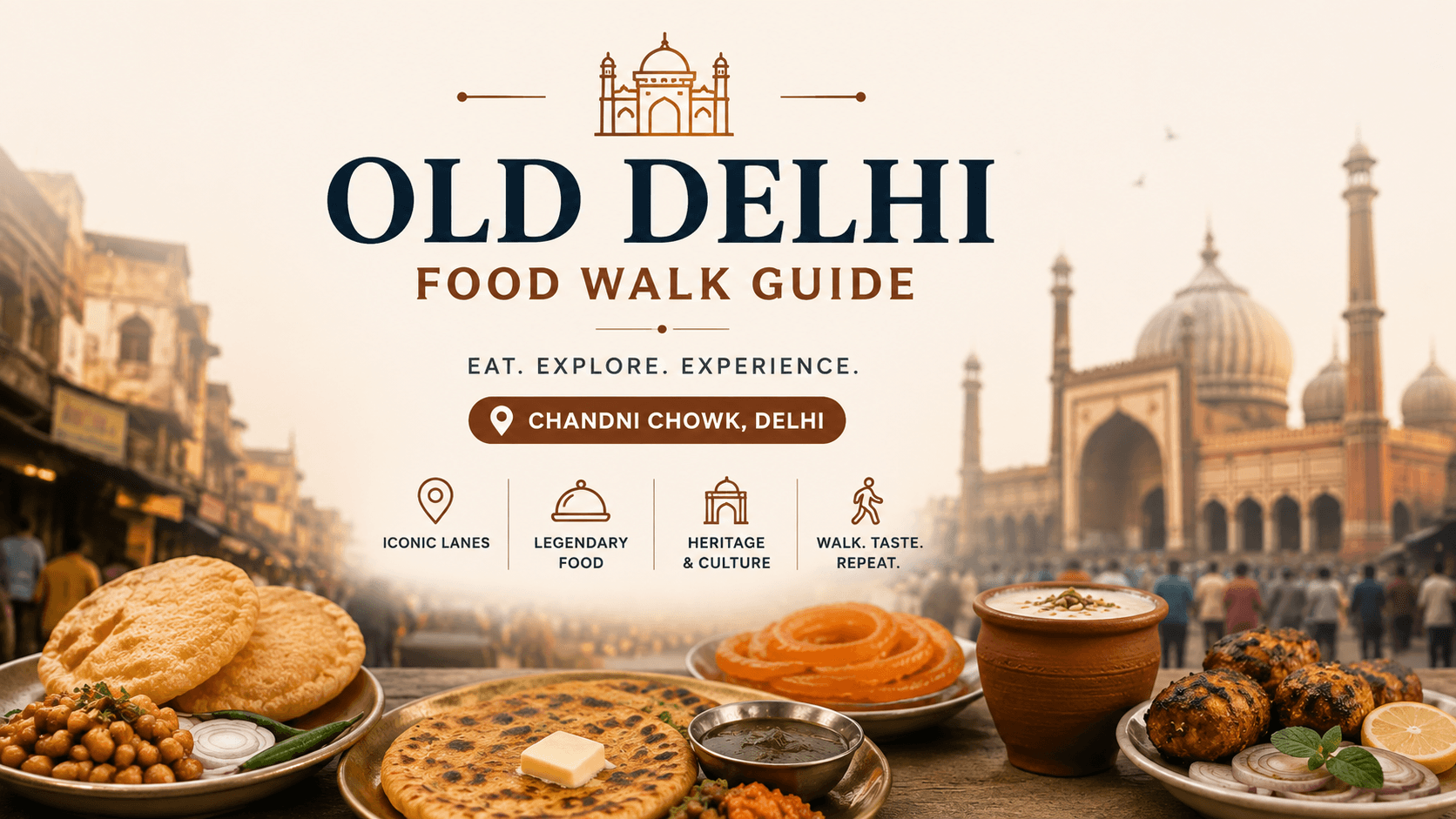
Old Delhi is best explored with an appetite. Behind the traffic, historic facades and crowded bazaars of Shahjahanabad lies a food culture built around generations-old recipes, narrow lanes and neighbourhoods where breakfast, snacks and dinner can all become part of the sightseeing. An Old Delhi food walk is therefore less about ticking off restaurants and more about understanding how the city eats.
For first-time visitors, the most rewarding route connects Chandni Chowk, Paranthe Wali Gali, Dariba Kalan, Khari Baoli and the Jama Masjid–Matia Mahal area. Along the way, you can move from stuffed parathas and chaat to jalebi, kulfi, kebabs and Mughlai dishes. Delhi Tourism also highlights this historic circuit for its markets, spice trade, religious landmarks and distinctive Old Delhi character.
This guide explains how to plan the walk, what to eat, which lanes deserve your time, how to manage crowds and where to stay for an easier Delhi food experience.
Why an Old Delhi Food Walk Is Different
Old Delhi does not feel like a conventional food district. The food is intertwined with the architecture, markets, places of worship and everyday commerce.
Chandni Chowk was developed as the commercial heart of Shahjahanabad, while the surrounding lanes evolved into specialised marketplaces. Today, the area still combines food, shopping and heritage within a remarkably compact part of central Delhi.
The experience changes every few hundred metres.
One lane may smell of freshly fried jalebi; another may be filled with dry fruits and spices. You can hear cycle-rickshaw bells while walking past centuries-old religious sites, then turn into a much quieter lane lined with traditional shops.
That variety is what makes the experience memorable.
Rather than choosing one restaurant and calling it a food tour, plan to share small portions at several stops. This lets you sample more dishes without becoming too full too early.
The Best Route Through Chandni Chowk
A practical first-timer route can begin around Chandni Chowk Metro Station and continue through the interior lanes before heading south towards Jama Masjid.
1. Start Around Chandni Chowk
Begin with a slow walk rather than immediately looking for food. Chandni Chowk's main road gives you your first sense of Old Delhi's scale, with shops, street vendors, religious buildings and pedestrians competing for space.
If you arrive early, the atmosphere is considerably easier to navigate than during the late-morning rush. Several recent walking guides recommend an early start because breakfast foods are available while the lanes remain relatively manageable.
2. Stop at Paranthe Wali Gali
For many visitors, this is the defining food stop.
Paranthe Wali Gali is a narrow lane known for stuffed parathas, with food shops historically associated with the area since the late 19th century. The parathas are generally richer and more indulgent than the everyday home-style version, often served with chutneys, pickles and accompaniments.
Do not make the mistake of ordering several plates immediately. One shared plate is usually enough to experience the preparation before moving on.
Traditional fillings can include potato, cauliflower, paneer and other combinations, while some shops offer more unusual sweet or savoury variations.
The lane itself is part of the attraction. Watch the cooks work in compact kitchens and notice how quickly food moves from preparation to plate despite the limited space.
3. Explore Dariba Kalan and Kinari Bazaar
After the paratha stop, walk towards Dariba Kalan and Kinari Bazaar.
These lanes shift the experience from eating to exploring. Dariba Kalan is historically associated with jewellery and traditional products, while Kinari Bazaar is known for wedding accessories, decorative materials and colourful merchandise.
This is also a useful point to slow down between food stops.
Old Delhi rewards travellers who do not rush. Look into side lanes, notice old building facades and allow yourself time to browse. The food walk becomes far more interesting when the neighbourhood itself becomes part of the itinerary.

4. Add Chaat to the Walk
A Chandni Chowk food tour should include at least one chaat stop.
Dahi bhalla, aloo tikki, papdi chaat and similar dishes bring a completely different flavour profile to the route: cooling yoghurt, tangy chutneys, spices and crisp textures.
Natraj Dahi Bhalla Wala near Chandni Chowk is among the area's best-known names for dahi bhalla and aloo tikki. Current travel guides continue to identify it as a popular stop for visitors exploring the market.
Because chaat can be filling, consider sharing one plate rather than ordering individually.
The Sweet Side of Old Delhi
No Delhi food trail is complete without something sweet.
Jalebi: Eat It Fresh
Fresh jalebi is one of the easiest ways to understand why Old Delhi's food is so closely connected to timing.
Look for jalebi that is served hot and crisp rather than something that has been sitting for hours. Old Famous Jalebi Wala, near the Dariba Kalan area, is one of the historic names frequently associated with Old Delhi's jalebi tradition.
The ideal approach is simple: order a small portion, eat it immediately and move on.
Kulfi for the Final Sweet Stop
Kulfi is another useful way to finish the vegetarian portion of your walk. Traditional kulfi is denser and creamier than standard ice cream, making a small serving surprisingly satisfying.
The lanes around Khari Baoli and the western side of Chandni Chowk have several traditional sweet shops and kulfi options.
If you are visiting during hot weather, have it later in the route rather than carrying it through the market.
From Chandni Chowk to Jama Masjid: A Different Food Culture
The character of the walk changes noticeably as you move towards Jama Masjid and Matia Mahal.
This side of Old Delhi is particularly associated with Mughlai food, kebabs, nihari and meat-based dishes. The streets around Gali Kababian and Matia Mahal are an important part of the culinary identity of Purani Dilli.
If you eat meat, this is where you can turn your food walk into a more substantial meal.
Karim's, established near Jama Masjid in 1913, is one of the area's most recognised Mughlai institutions. Other nearby establishments also specialise in kebabs, nihari and related dishes, so you do not necessarily need to queue for one famous name if your priority is simply experiencing the local cuisine.
For a more complete Chandni Chowk food tour, consider dividing the experience into two phases: vegetarian snacks and sweets around Chandni Chowk, followed by a proper Mughlai meal around Jama Masjid.
Add Khari Baoli for the Sensory Experience
Khari Baoli is not primarily a street-food destination, but it deserves a place on the route.
It is famous as a major spice market, and the sheer quantity of spices, dried fruits and ingredients creates one of the most distinctive sensory experiences in Old Delhi. Delhi Tourism specifically highlights Khari Baoli and advises visitors to remain alert in the crowded market environment.
Do not plan to spend your entire food budget here. Instead, use the market as a short exploration stop.
The aromas alone explain something about Delhi's cuisine: spices are not an afterthought but a fundamental part of how the city's food is constructed.
How to Plan Your Old Delhi Food Walk
Start Early
Early morning or late morning is generally more comfortable than the busiest part of the day.
An early start also works particularly well if you want to combine breakfast foods with sightseeing. Later in the day, the lanes can become significantly more crowded.
Avoid Eating a Full Breakfast at Your Hotel
If food is the purpose of the visit, keep your hotel breakfast light.
You will want enough appetite for paratha, chaat, jalebi, kulfi and potentially a Mughlai meal. Sharing dishes is one of the best strategies for first-time visitors.
Carry Small Cash
Although digital payments are common across Delhi, small shops and street vendors can vary in their payment options. Carrying some small-denomination cash makes quick purchases easier.
Wear Comfortable Shoes
This is a walking experience, not simply a restaurant-hopping trip.
Expect uneven lanes, crowded pavements, frequent stops and periods when walking is slower than expected. Comfortable footwear makes a significant difference.
Keep Your Belongings Secure
Crowded markets require normal urban travel precautions. Delhi Tourism specifically cautions visitors about pickpockets around the crowded Khari Baoli area.
Keep phones and wallets secure, especially when stopping to photograph food or navigating busy intersections.
Be Sensible About Street Food
Choose busy stalls where food is being prepared frequently and turnover is high. Eat freshly cooked items while they are hot, carry drinking water and avoid trying too many rich dishes consecutively.
If travelling with children, older family members or anyone with dietary restrictions, prioritise cooked food and established eateries over experimenting at every stall.
Combine Food With Old Delhi's Heritage
One of the biggest advantages of this route is that food does not have to be your only activity.
You can combine the walk with Red Fort, Jama Masjid, Gurudwara Sis Ganj Sahib, Dariba Kalan, Kinari Bazaar and Khari Baoli.
Jama Masjid and the Red Fort provide the strongest architectural anchors, while the markets reveal the living commercial character of Old Delhi. Delhi Tourism describes the wider Purani Dilli area as a place where historic religious sites, markets and culinary traditions exist closely together.
Allow extra time if you want to visit the monuments rather than simply walk past them.
Where to Stay for Easy Access to Old Delhi
Your choice of neighbourhood can make a noticeable difference to the food experience.
Paharganj is practical for budget travellers and is close to New Delhi Railway Station, while Connaught Place works well for travellers who prefer a more spacious, centrally located base with easy access to multiple parts of the city. Travellers staying around central Delhi can reach Old Delhi using the metro and then continue on foot.
For families, couples and business travellers, choosing a hotel with reliable transport access can be more comfortable than staying immediately inside the busiest Old Delhi lanes.
Goroomgo can be useful when comparing hotels by location, price and amenities before your Delhi trip. Rather than selecting accommodation solely because it is close to Chandni Chowk, consider your complete itinerary and choose a neighbourhood that makes both Old Delhi and your other Delhi attractions accessible.
A Simple Half-Day Itinerary
If you have around four hours, a practical sequence is:
8:00–8:30 AM: Arrive around Chandni Chowk
8:30–9:15 AM: Explore the main lanes and head towards Paranthe Wali Gali
9:15–10:00 AM: Share a stuffed paratha and continue through Kinari Bazaar
10:00–10:45 AM: Chaat or dahi bhalla stop
10:45–11:15 AM: Dariba Kalan and nearby lanes
11:15–11:45 AM: Explore Khari Baoli
11:45 AM onward: Continue towards Jama Masjid and Matia Mahal for a larger meal
The exact timing should remain flexible. Old Delhi works better when you leave room for unexpected discoveries rather than treating the route like a checklist.
Final Thoughts
An Old Delhi food walk is ultimately a lesson in eating slowly, exploring curiously and understanding the neighbourhood beyond its famous dishes. Start around Chandni Chowk, share small portions, explore Paranthe Wali Gali and the historic market lanes, then continue towards Jama Masjid if you want to experience Old Delhi's Mughlai side.
A well-planned Chandni Chowk food tour should leave enough time for the markets, architecture and everyday life between meals. Arrive early, wear comfortable shoes, keep your belongings secure and avoid trying to eat everything in one visit.
Most importantly, do not measure the experience by the number of dishes you manage to finish. In Old Delhi, the real reward is the combination of flavour, history and street-level atmosphere that makes every turn into another lane feel like part of the journey.
Written by Goroomgo Editorial Team
Travel Writers & Hospitality Experts
We are dedicated to bringing you the best budget travel tips, hotel reviews, destination guides, and stories to inspire your next adventure across India.